
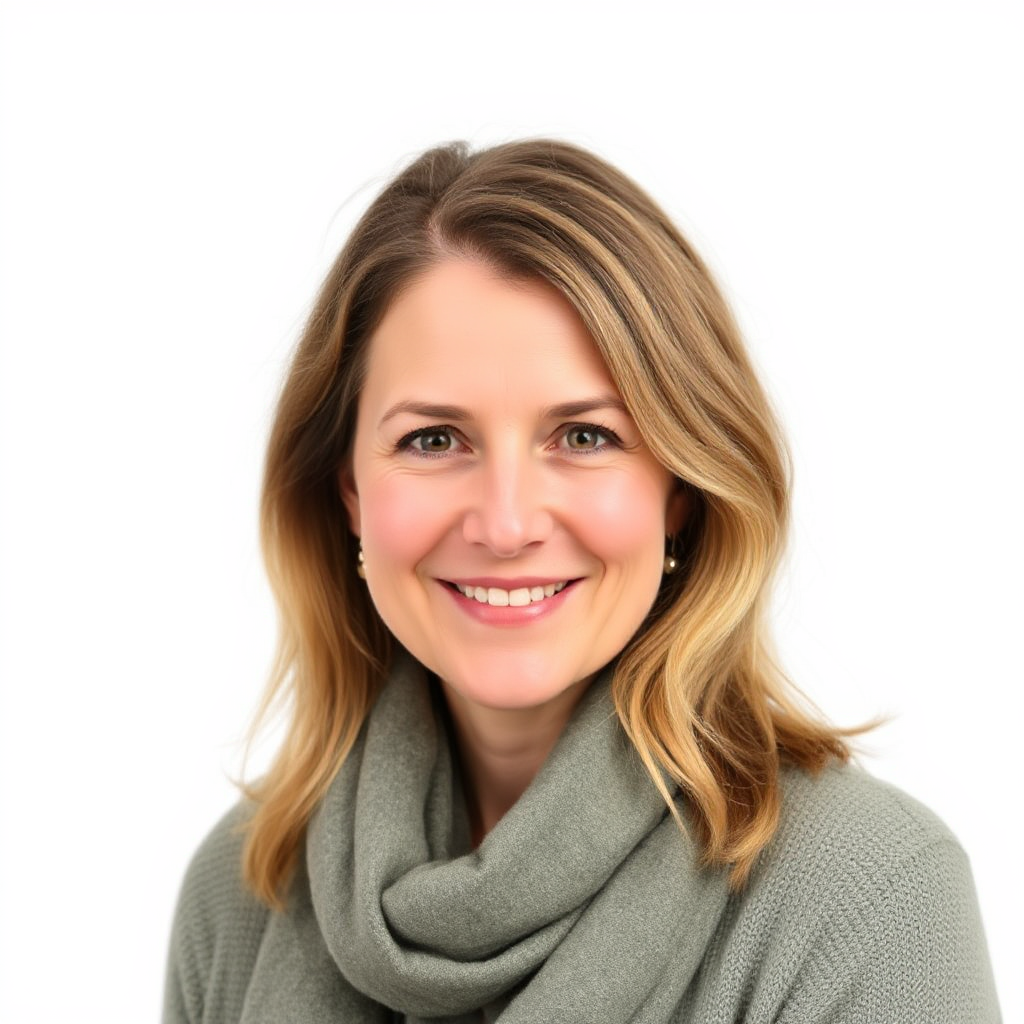

Kirill Dmitriev embodies a distinct category of Russian diplomat.
At 50 he is relatively young and has developed a deep understanding of the United States, having completed degrees and gained experience there for several years.
He is furthermore a business professional, as director of the Russian Direct Investment Fund, and establishes a strong match with his equivalent in the US government, special envoy Steve Witkoff.
Peace Plan Discussions
Dmitriev now finds himself under the attention over a proposed agreement that emerged after he spent three days with Witkoff in Miami.
His staff has declined to discuss its proposals, which appear as a Putin wishlist, requiring Ukraine to cede territory under its control and reduce the size of its military.
Ukraine's Volodymyr Zelensky has been careful not to refuse its provisions, but declares any agreement must bring a "respectful solution, with terms that respect our sovereignty, our self-determination".

History and Foreign Policy Work
Putin's special envoy grasps modern Ukraine with greater insight than many in Moscow.
He was brought up in Ukraine, and a friend claims that as a teenager Dmitriev participated in freedom rallies in Kyiv before the fall of the Soviet Union.
He has been a consistent participant of bilateral diplomatic projects essentially since the commencement of Trump's second presidency - and Steve Witkoff has been a frequent contact.
"We are confident we are on the journey to resolution, and as mediators we need to achieve it," Dmitriev declared during a meeting in Saudi Arabia in late October.
Ongoing Peace Initiatives
The pair reportedly first encountered each other in last February when Putin's envoy was instrumental in achieving the liberation of an US educator from a Russian jail.
"There's a individual from Russia, his name is Kirill, and he had a lot to do with this. He was essential. He was an vital intermediary linking the both parties," Witkoff informed reporters.
Subsequently, when representatives from both nations convened in Saudi Arabia, in effect ushering an termination to Russia's global ostracization in the West, Dmitriev participated in discussions on trade partnerships and Witkoff was there also.
Criticisms
Dmitriev's straightforward method to Trump officials has not always paid off.
When Trump revealed sanctions on Russia's leading oil firms last month, US Treasury Secretary Scott Bessent called him a "Moscow advocate" for indicating it would result in elevated US energy expenses at the outlet.
In contrast to the bulk of Putin's inner circle, the Russian leader's envoy is at ease in a Western media outlet.
He is careful to praise Trump's diplomatic skills while presenting Western viewers the Russian government narrative in their familiar terms.
"I'm not from the armed forces… but the stance of [the] Russian military is they solely strike armed forces locations," he informed CNN's Jake Tapper recently, not long after a childcare center was attacked in the Ukrainian city of Kharkiv. "I'm just working to maintain communication and guarantee that the conflict is concluded as soon as possible."
Private Associations
Dmitriev undoubtedly is not a combat specialist, he's a private investment specialist with an eye for a deal.

Witkoff may appreciate him, but in 2022 during Joe Biden's term, the American financial authorities described him a "recognized Kremlin associate" and established limitations on the Russian Direct Investment Fund (RDIF) which he has run since 2011.
"While formally a sovereign wealth fund, RDIF is generally viewed as a unofficial treasury for President Vladimir Putin and is emblematic of Russia's broader kleptocracy," it said.
Dmitriev's perspective to the earlier presidency is rather obvious: under Biden there was no attempt to appreciate the Russian stance, he maintains, while Trump's staff prevented World War Three.

Individual Background
It is reported that Dmitriev has amassed a extensive holdings with his wife, TV presenter Natalia Popova.
Popova is a acquaintance and associate of Vladimir Putin's offspring, Katerina Tikhonova - and deputy head of Tikhonova's innovation enterprise Innopraktika.
Dmitriev is also generally viewed as within Tikhonova's circle.
His career advancement in Moscow is a marked contrast from his early years in Kyiv, as the child of two academics.
Dmitriev's father is a prominent cellular researcher in Ukraine and his parent a DNA specialist.
That scientific background may have shaped his initiative to use his Russian state investment vehicle to fund Russia's Covid vaccine Sputnik V.
Formative Period
Dmitriev is thought to have first been introduced to Russia's long-time leader at the beginning of his term in 2000, but he has not always agreed with his perspectives.
While Putin saw the collapse of the Soviet Union as the "biggest political disaster of the hundred years", a friend asserts Dmitriev joined an youth demonstration in Kyiv at the age of 15.
His connection with the US commenced the same year, in 1990, when he was involved in a academic program in New Hampshire, where a community journal cited him emphasizing Ukraine's sovereign character: "Ukraine had a extended tradition as an autonomous state before it was incorporated of the Tsarist regime."
Education
He subsequently came back to the US as a college student and composed a thesis on corporate transfer in Ukraine while at Stanford University.
In his academic plan he suggested the investigation would "enhance my readiness for providing input to the transformation effort in Ukraine".
After receiving an MBA at Harvard, he worked for McKinsey in the West Coast, Prague and Moscow, and then became part of the US-Russia Investment Fund, set up by the US to ease Russia's transition to a market economy.
Professional Evolution
Dmitriev seemed critical of Putin


